Munich, Germany - November 12, 2026 – SE3, the European spatial intelligence provider for autonomous systems, has today raised $30 million in Series A funding. Accel led the round, with participation from Keen, Lakestar and Seedcamp.
While AI can now automate significant portions of knowledge work, it still struggles to understand and operate in three dimensions. SE3 was created to close this gap and bring AI to the physical world. The Munich-founded company combines computer vision and AI to help machines turn sensor data into spatial understanding, enabling them to operate autonomously. The company is developing its technology for complex environments where systems must work reliably, including when satellite navigation is disrupted.
The company’s primary focus is on European defence where, in an era of rapid geopolitical shifts, investment in sovereign technology is rising. The EU aims to mobilise €800B in defence spending by 2030, with plans for a European Drone Wall to defend its Eastern Flank. Here, and in Ukraine - where SE3 is already deployed - large drone fleets stretch the limits of human supervision, while electronic warfare disrupts satellite navigation. As a result, autonomy is now critical to defence systems, and spatial intelligence has become essential for it to work.
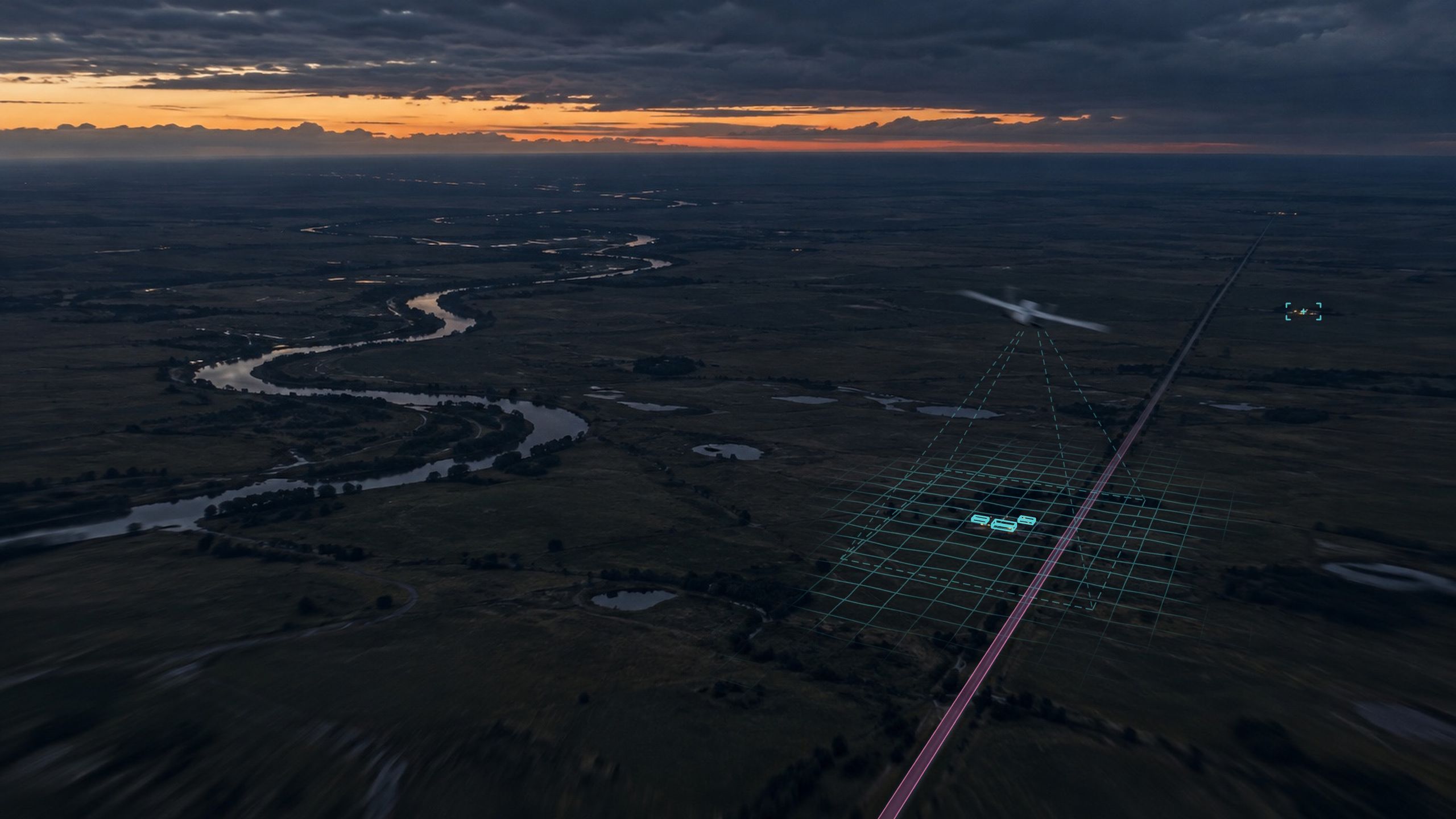
SE3’s platform-agnostic technology acts as the spatial intelligence software layer for unmanned systems. It connects drones and ground vehicles from different manufacturers, and fuses their sensor data into a shared 3D picture of the environment that enables full spatial awareness and understanding. The software operates the swarm intelligently, optimising behavior, routes and positions for each system based on its understanding of the terrain. Operators can command all functions via voice commands. The software runs entirely on-edge and ensures systems remain operational in contested environments.
SE3 built its technology for a defence procurement landscape increasingly focused on modularity and interoperability. The Modular Open Systems Approach (MOSA) and Germany’s MOSABw programme are making it easier for armed forces to combine systems from different suppliers, driving demand for neutral, independent software that can integrate across manufacturers’ platforms without competing with their unmanned vehicles.
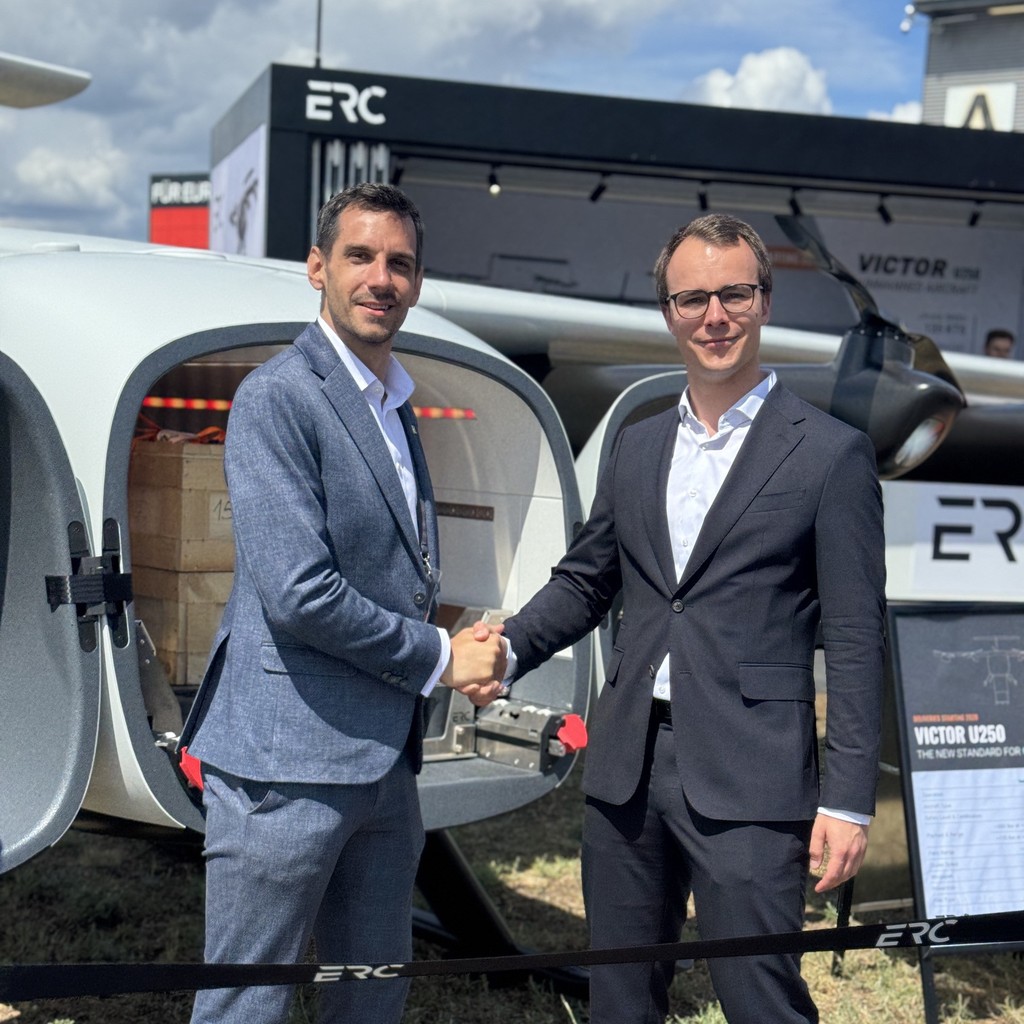
In the last two years, SE3 has shipped thousands of systems and is working on multiple contracts with Ukraine and with Germany’s armed forces, the Bundeswehr. SE3 is an AI partner to leading defence primes such as Rheinmetall and HENSOLDT, and to fast-growing scale-ups such as Auterion and ERC System, as well as many others.
SE3 was founded by CEO Lukas Köstler, CTO Simon Klenk, and Chief Science Officer Professor Daniel Cremers. The company spun out of Cremers’ computer vision lab at the Technical University of Munich (TUM), where Köstler and Klenk were working on PhDs in computer vision and robotics. Professor Cremers holds TUM’s chair for computer vision and AI, and is a recipient of the Gottfried Wilhelm Leibniz Prize, Germany’s most prestigious research award.
The funding will be used to grow SE3’s engineering, commercial and operations teams, ready to fulfil further contracts as the company scales. As well as strengthening its presence in Germany and Ukraine, SE3 is also opening an office in the UK and plans to expand further across Europe. Defence remains its immediate focus, with plans to explore robotics, emergency response and other civilian applications for demanding environments from 2027.
“Working in defence means our technology has to deliver under pressure in the field. We keep that responsibility front of mind in everything we do, working closely with the people who rely on our systems when it matters. Ultimately, today’s funding will get us closer to providing the spatial intelligence technology needed across Europe to protect a free and secure future.”
“With exceptional talent from one of Europe’s leading research departments, the SE3 team is uniquely qualified to take on the challenge of building spatial AI for autonomous systems - something defence primes have found so difficult to do. We’re delighted to back Lukas, Simon, Daniel and team as they build sovereign spatial intelligence for Europe.”
“Autonomy only counts if it holds up when satellite navigation is jammed and one operator is responsible for many vehicles. SE3’s spatial intelligence runs on Skynode, so our customers get that capability on the platforms they already operate, across manufacturers. This is how open architectures are supposed to work, and the funding lets SE3 deliver it at the scale European forces now need.”